
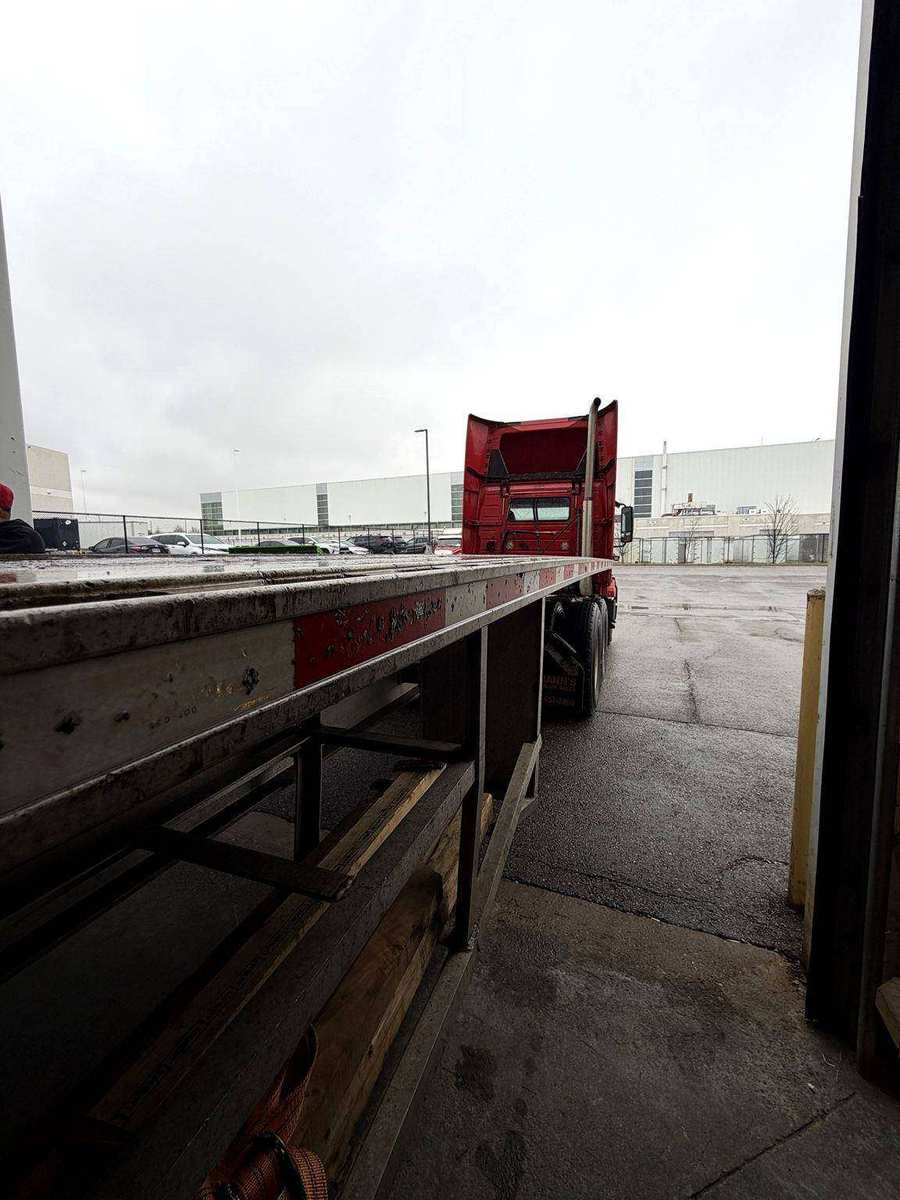
Freight Delivery Without a Loading Dock
Most GTA Delivery Locations Have No Loading Dock
Loading docks are the exception. Warehouses and large distribution centres have them. Retail stores, renovation sites, restaurants, small commercial units, and residential addresses do not. If your freight is going to any of these locations and your carrier has no tailgate, the delivery fails before the truck leaves the pickup point.
What Happens Without a Dock or Tailgate
Without a dock and without a tailgate, heavy or palletized freight cannot be safely offloaded from a standard box truck. The bed sits 48 to 52 inches off the ground. A pallet of tile weighing 800 pounds cannot be lowered manually without product damage or injury risk. Carriers without tailgates offer curbside delivery only — freight reaches the back of the truck and stops there. If the location cannot bridge the gap from truck bed to ground the delivery fails, a re-delivery fee is charged, and the recipient waits.
The Tailgate Solution
A hydraulic tailgate is a platform at the rear of the truck that raises to bed height for loading and lowers to ground level for offloading. It bridges the vertical gap that docks solve with a fixed ramp. For retail storefronts, renovation sites, restaurants, condo buildings, and any commercial location without dock access, tailgate service is the standard solution. Not every carrier has one — always confirm before booking for a non-dock location.
Pallet Jacks and Inside Delivery
After freight is lowered from the truck it still needs to reach its final position. A manual pallet jack moves a loaded skid across flat surfaces — warehouse floors, retail back rooms, ground-level commercial spaces. It cannot navigate stairs and handles poorly on uneven terrain. If the delivery requires getting freight inside, through a corridor, or into a specific room — this is inside delivery, an additional service that needs to be confirmed and priced at booking, not discovered on arrival.
Planning a Non-Dock Delivery
Before booking confirm: Does pickup require a tailgate? Does delivery require a tailgate? Is inside delivery needed — stairs, elevators, specific placement? Is there room for the truck to park and lower a tailgate at the delivery address? These questions take two minutes to answer at booking time. Not answering them costs hours and money on delivery day.
Common Non-Dock Scenarios
Residential renovation sites require tailgate for heavy materials. Restaurant equipment deliveries require tailgate and often inside delivery. Retail fixture deliveries require tailgate and frequently inside placement. Commercial offices receiving furniture require tailgate and elevator or stair coordination. Standard manageable scenarios for a carrier who handles them regularly — and failures for one who does not.
Building Dock Access Confirmation Into Your Standard Process
The most reliable way to avoid tailgate-related delivery failures is to make access confirmation a standard step in every freight booking rather than an afterthought. Before any shipment is confirmed, verify two things: whether the pickup location has dock access or requires tailgate, and whether the delivery location has dock access or requires tailgate. This takes 60 seconds to confirm and eliminates the most common avoidable failure in commercial freight delivery.
If you are a supplier delivering to contractor job sites or residential renovation projects, build a standard access questionnaire into your order fulfillment process. When a client places an order that requires delivery, collect the delivery address, the site contact name and direct number, the delivery window, and the access conditions — dock or no dock, any parking restrictions, any building requirements — before the delivery is ever scheduled. This information prevents failures, speeds up dispatch, and produces a more professional experience for your clients.
Carriers who ask these questions before dispatch are doing exactly what professional freight operations require. If a carrier does not ask about dock access before confirming a delivery, that is worth noting — it suggests they are not thinking through the delivery requirements before committing to the job. Professional delivery operations confirm access conditions as a matter of standard practice, not as a reactive measure after problems arise on delivery day.
Frequently Asked Questions
How fast can freight move across Ontario?
Transit time depends on route, urgency, freight size, and scheduling requirements. Same-day and next-day options are often available within Southern Ontario.
Do businesses need a loading dock?
No. Tailgate-capable trucks can often handle deliveries where no dock is available.
Can contractors schedule recurring deliveries?
Yes. Many businesses use scheduled recurring delivery support for materials, fixtures, inventory, and commercial shipments.
Need Freight or Courier Support?
Dragonfly Delivery supports businesses, contractors, suppliers, and commercial customers across Toronto, the GTA, and Ontario with practical freight coordination and direct communication.
Request a Delivery QuoteRelated freight delivery resources
Planning a pallet, skid, job-site delivery or time-sensitive commercial shipment? Dragonfly Delivery supports freight-first delivery across Toronto, the GTA and Ontario, including tailgate requirements, scheduled routes and LTL-style freight coordination.
Pallet freight delivery · Ontario freight delivery · Request a Delivery Quote